Your certificate is also your best marketing channel, and you are wasting it
Every certificate you issue is opened by employers, institutes and clients at the moment they decide to trust you. A PDF gives them a logo and gives you nothing back. Here is how a live verification page turns that moment into a channel, what its traffic tells you, and how to get graduates sharing.
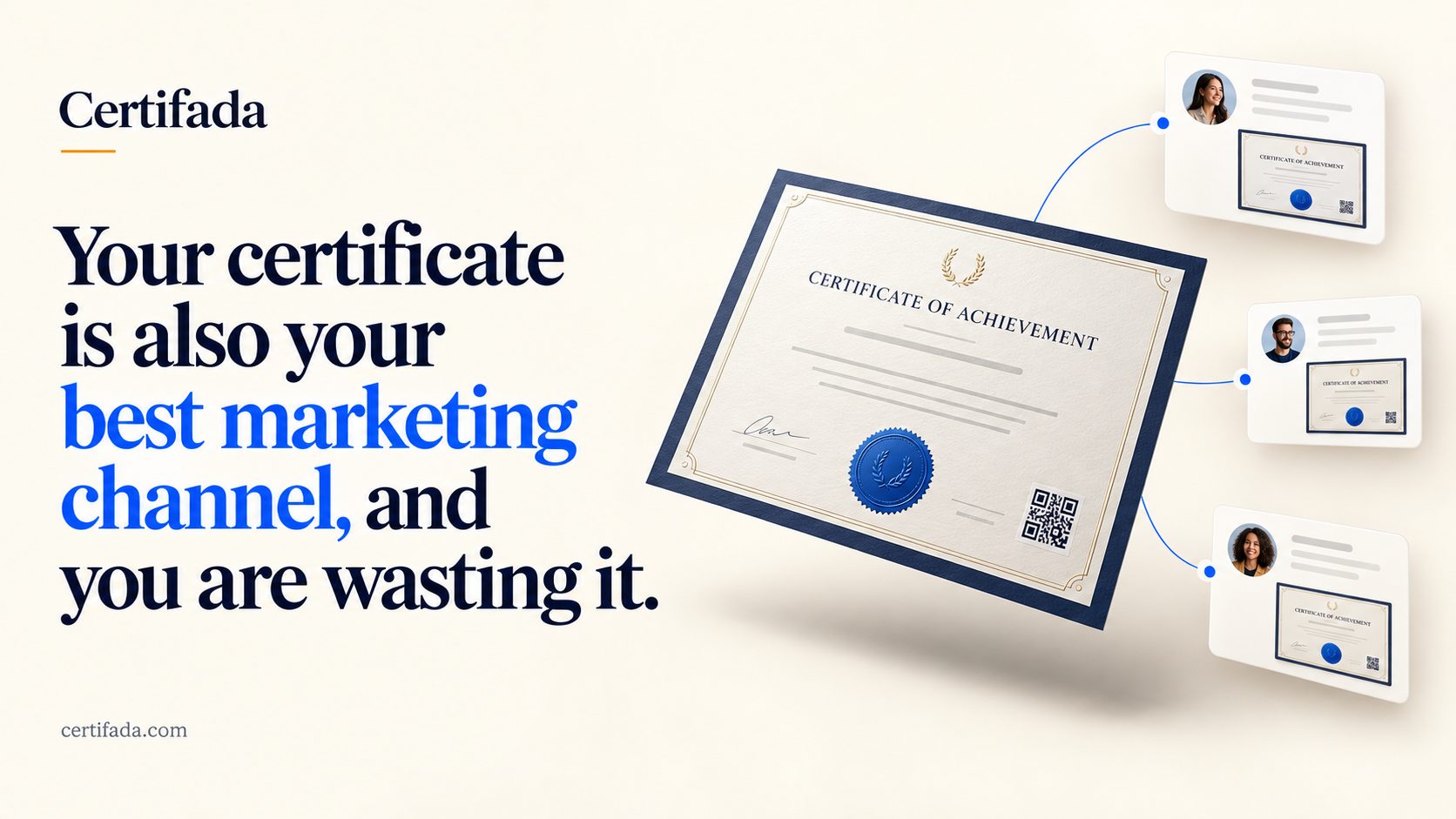
Every certificate you issue is looked at by someone who is not the recipient. A recruiter checking a CV. An admissions officer at the next institute. A client deciding whether the freelancer is really certified. A parent who wants to know the course was real. Each of those people arrives with one question, and they arrive at whatever your certificate points to.
For most issuers, that is a PDF. The recruiter opens it, squints at the logo, and closes it. You learn nothing. They learn nothing about you. The moment of highest attention your brand will ever get from a stranger is spent on a static file.
This article is about that moment, and how to stop wasting it.
Who actually looks at a certificate
Recipients look at their certificate once, on the day they receive it. Everyone else looks at it when it matters: when a job, a visa, a promotion or an enrolment depends on it. Those viewers are not your students. They are employers, institutions and clients, which is to say they are exactly the audience your marketing budget is trying to reach.
They are also in a rare state of mind. They are not scrolling past an ad. They have opened your credential on purpose, to make a decision, and they will read whatever is on the page. No campaign buys attention like that.
A printed or emailed PDF gives that audience a name, a date and a logo. It gives you nothing back: no idea who looked, from where, or whether they believed it.
The verification page is a product page
When a certificate resolves to a live verification page instead of a file, the same moment becomes a visit to a page you control. Treat it as one.
A good verification page does the job it exists for first: it says clearly whether the credential is valid, who issued it, to whom, and when, and it shows the certificate itself. That answer is what the visitor came for, and it has to be honest and instant.
But around that answer there is room for everything a prospective student would want to know about you:
- Your brand, not the platform's. Your logo, your colours, your name at the top. The visitor should leave knowing who you are, not which software you use.
- The programme. The course name written the way you sell it, not an internal code. A short description of what the holder learned.
- Who you are. Your website, your location, your issuer profile, and, once you have completed issuer verification, a visible mark that your identity was checked. A recruiter who trusts the credential is one step from trusting the institute.
- A path forward. A link to the programme page or to enrol. The person verifying a colleague's certificate today is often the person choosing their own course next quarter.
None of this dilutes the verification. It surrounds a trustworthy answer with the context that makes the trust transfer to you.
What the traffic tells you
The second thing a live page gives you is data, and it is data you cannot get any other way.
Certifada records every verification as a view, classified by how the visitor arrived: from a QR scan, from the link in the delivery email, from a direct visit, or from a share. It records the country the check came from. It shows this per credential and across your whole workspace, over time.
Read that for a quarter and you will learn things about your programmes that no survey will tell you:
- Which certificates are used. A course whose certificates are verified constantly is a course employers care about. One whose certificates are never checked may be a course nobody presents. That is a curriculum signal, and it is free.
- Where your graduates go. Verifications from a country you do not teach in mean your alumni are working there, and that your certificates are accepted there. That is a market you did not know you had.
- When the QR code earns its place. If most scans come from printed certificates, the paper is still doing work. If almost all views come from email links and shares, you can stop paying for foil and frames.
- Whether recipients share. Views arriving from social links are your graduates advertising you. A low share rate is not a fact of life; it is a prompt to make sharing easier.
The number worth putting on a dashboard is simple: verifications per hundred credentials issued. It is the closest thing to a measure of whether your certificates matter in the world, and it is the number a PDF can never give you.
Let the recipient do the marketing
A graduate who posts a certificate on LinkedIn is doing your outreach for you, to precisely the professional network you want to reach. Most of them do not, because sharing a PDF is awkward and looks like nothing in a feed.
Fix the mechanics and the behaviour follows:
- Share buttons on the credential itself, so posting takes one tap and the post carries the certificate image, the course name and a link that verifies. A share that shows a real certificate gets attention; a share that shows a bare link does not.
- Wallet passes. A credential added to Apple Wallet or Google Wallet is a credential the holder carries. It gets shown at interviews and to clients in person, with the QR code one tap away. Every one of those moments is a verification you will see in your traffic.
- Open Badges. For professional and technical programmes, an image that carries its own verifiable proof can be imported into badge platforms and profile pages the graduate already uses. Your brand travels with it.
- Both languages. In our region a credential is presented to Arabic and English readers alike. A certificate that reads correctly in both, with a verification page to match, is shared more, because the holder never has to apologise for it.
Each of these turns one recipient into a channel. Fifty graduates a month with a five percent share rate is thirty free, well-targeted posts a year. Make sharing easy and that rate climbs.
Setting it up
None of this requires a marketing team. In Certifada it is an afternoon:
- Brand appearance. Upload your logo and set your colours under Organization settings. Every verification page and every delivery email picks them up.
- Issuer profile. Add your website and a short description, and complete issuer verification so the verified mark appears on your pages.
- Template names. Name each template the way the programme is sold. That name is what the recruiter reads and what the graduate shares.
- Open Badge details. For programmes where it matters, add the criteria and the skills. It costs ten minutes per template and it makes the credential readable by other systems.
- Delivery. Send by email and WhatsApp with the verify link and the wallet buttons switched on. The link is what gets forwarded; the wallet pass is what gets shown.
- Watch the traffic. Open the Verification traffic view once a month. Look at sources, countries and the top programmes, and compare against last month.
What this is really about
Institutes spend real money to get in front of employers and prospective students. Meanwhile, every certificate they issue is a guaranteed visit from exactly those people, and most of it lands on a file that says nothing and reports nothing.
Moving the credential from a document to a page does not just make it verifiable. It makes the most trusted moment in your relationship with the outside world work for you, and it tells you, for the first time, whether anyone is looking.
You can see what a graduate's link looks like on the verify page, or read how verification stays free forever so that this channel never closes.

Related articles
 Digital credentials
Why certificate verification is free forever on Certifada (and why your credentials outlive your subscription)
Two guarantees most credentialing platforms do not make: verification is never metered or rate-limited, and every credential stays verifiable even after the issuer stops paying. Here is why, how it works, and what to ask any vendor.
Certifada Team 5 min read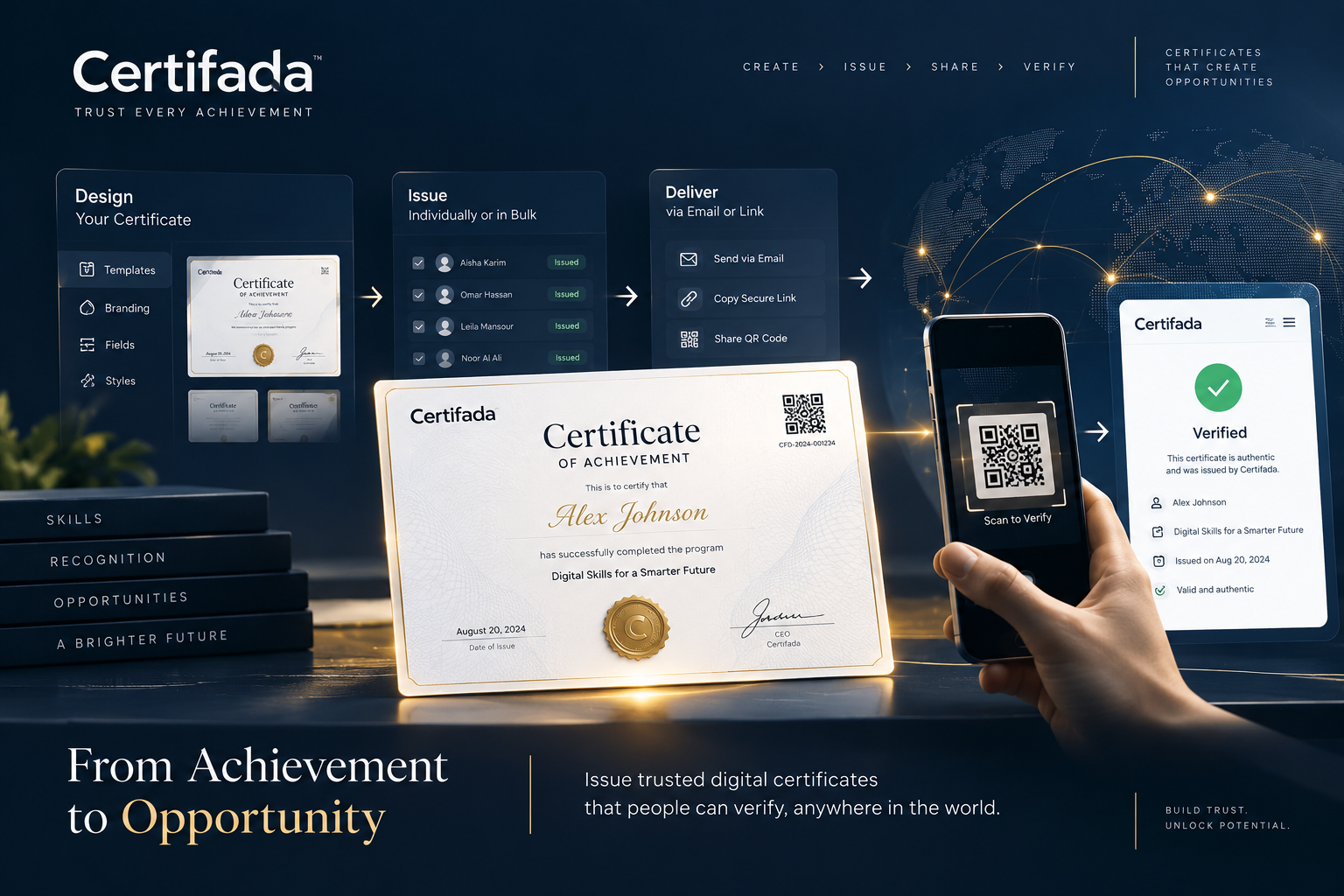 Guides
How to issue verifiable digital certificates: a practical guide
What makes a certificate verifiable, and how to get there: a reusable template, bulk issuance from a spreadsheet, wallet delivery, and a public verification page anyone can check in seconds.
Certifada Team 5 min read